The Quiet Migration: Why Serious Traders Are Abandoning Manual Methods for Autonomous Agent Systems
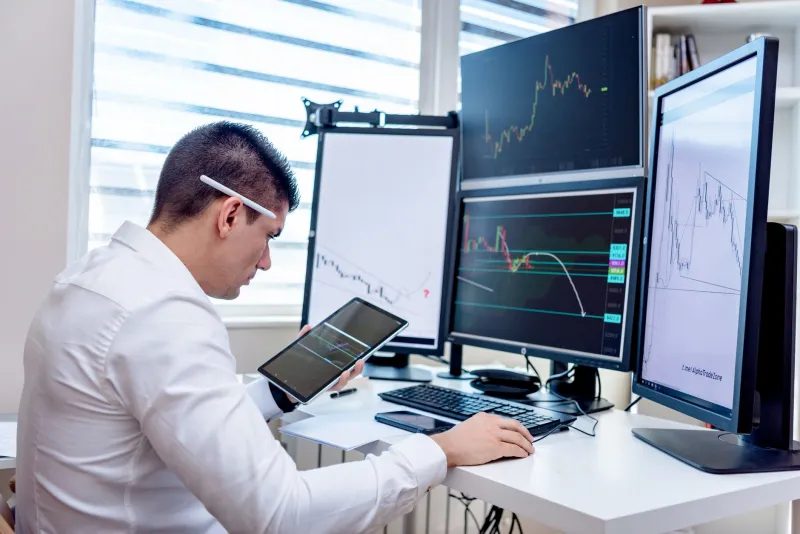
There is rarely a dramatic announcement. No press release, no public forum post, no admission to peers. Instead, the transition happens incrementally — a trader reduces their manual position sizes, delegates a single strategy to an autonomous agent, monitors the results over ninety days, and then quietly expands the agent's mandate. Within a year, the human's direct involvement in execution has been reduced to governance and oversight. The migration is complete, and it happened without fanfare.
This pattern is repeating itself across the United States at an accelerating pace. Hedge funds operating out of Chicago and New York, proprietary trading firms in Miami, and independent retail traders managing six-figure crypto portfolios from suburban homes in Texas and California are all arriving at the same conclusion: autonomous agent systems are not a supplementary tool. They are, for those serious about performance, becoming the primary instrument of market engagement.
What the Performance Data Actually Shows
The case for agent-based trading begins with execution quality, and the numbers are difficult to argue against. Manual traders, even experienced ones, operate within physiological constraints that autonomous systems simply do not share. Reaction latency for a human monitoring a screen averages between 200 and 300 milliseconds under optimal conditions. An autonomous trading agent operating on a well-configured blockchain infrastructure can identify a signal, validate it against pre-set parameters, and submit a transaction in a fraction of that window.
In liquid markets, this difference may appear marginal. In the fragmented, often illiquid corridors of decentralized finance — where arbitrage windows open and close in seconds and gas fee fluctuations can determine whether a trade is profitable — that latency gap is the difference between capturing an opportunity and watching it disappear.
Beyond raw speed, the consistency advantage compounds over time. Studies comparing manual trading journals against agent execution logs across equivalent market conditions consistently show that human traders introduce variance through emotional decision-making, particularly during drawdown periods. An agent system operating under a defined smart contract framework does not hesitate, does not revenge-trade, and does not deviate from its parameters because of a poor night's sleep or a distracting news cycle.
One early adopter who transitioned from manual altcoin trading to a multi-agent architecture in early 2023 described the first quarterly comparison as "genuinely unsettling." His agent-managed positions had outperformed his manual trades by a margin he attributed almost entirely to discipline rather than strategy superiority. "The strategy was the same," he noted. "I just stopped getting in my own way."
The Institutional Shift Nobody Is Advertising
At the institutional level, the migration is more structured but equally deliberate. Proprietary trading desks that once relied on teams of human analysts to monitor DeFi protocols and identify yield opportunities have begun deploying agent frameworks that perform continuous monitoring across dozens of chains simultaneously. The competitive logic is straightforward: a team of six analysts working in shifts cannot match the coverage breadth of a properly architected agent network operating around the clock without fatigue or attention degradation.
The reluctance to publicize this shift is understandable. Firms that have invested in agent infrastructure have a direct competitive interest in maintaining the perception that manual expertise remains the dominant paradigm. If the performance advantage of autonomous systems becomes widely acknowledged, the edge narrows. Silence, in this context, is a form of strategy.
Retail traders face a different but related incentive to stay quiet. Admitting that an algorithm is outperforming years of self-developed skill carries a psychological cost that many are unwilling to absorb publicly, even when the private evidence is conclusive.
The Psychological Barrier and Why It Costs Real Money
The single most persistent obstacle to adoption is not technical. It is emotional. Manual trading, particularly in crypto markets, carries a significant identity component for many participants. The ability to read charts, interpret sentiment, and make independent calls is, for a substantial portion of the trading community, a source of professional self-definition.
Relinquishing execution authority to an autonomous system feels, for many traders, like an admission of inadequacy. This perception is both common and expensive. The traders who have made the transition most successfully are those who reframed the relationship: the agent handles execution with mechanical precision, while the human provides strategic oversight, parameter governance, and risk architecture. The skill set required does not disappear — it evolves.
Psychologists who study financial decision-making describe this as the "control premium" — the extra psychological value humans assign to direct involvement, even when that involvement produces measurably inferior outcomes. In crypto markets, where volatility is extreme and the temptation to intervene during drawdowns is intense, this premium has a quantifiable cost.
Traders who have cleared this psychological barrier consistently report the same observation: the hardest part was the first month of watching the agent operate without intervening. After that, the data became persuasive enough to override the instinct to take back control.
What Human Traders Lose by Waiting
The compounding nature of agent-driven performance means that delay is not a neutral choice. Every quarter a trader spends executing manually while agent-equipped competitors operate at higher efficiency and lower emotional cost represents a widening gap that becomes progressively harder to close.
This is particularly acute in the current US market environment, where regulatory clarity is gradually improving and institutional participation in DeFi is expanding. As more sophisticated capital enters the space with agent infrastructure already in place, the information asymmetry advantages that manual traders once exploited through speed and intuition are eroding. The market is becoming faster, more efficient, and more systematized. Manual methods, by contrast, remain static.
There is also the question of opportunity cost in terms of time. A serious manual trader monitoring positions across multiple protocols, managing risk parameters, and staying current on protocol developments is committing substantial hours that an autonomous agent framework would reclaim. Those hours, redirected toward strategy development and governance architecture, represent a qualitatively different and arguably more valuable use of human expertise.
Adapting Without Abandoning Judgment
The most successful transitions observed among early adopters share a common structural feature: the human remains genuinely in control of the system's strategic parameters, even as execution authority is delegated entirely to the agent. This is not passive investing. It requires rigorous governance discipline, regular performance auditing, and a willingness to update agent parameters as market conditions evolve.
At 9Wickets Agent, this philosophy is embedded in the platform's architecture. Smart contracts define the boundaries within which agents operate, and those boundaries are set, reviewed, and adjusted by the human principals who understand both the strategy and the risk tolerance at stake. The agent executes with precision. The human governs with judgment. Neither function can replace the other, but together they produce outcomes that neither achieves independently.
The migration is quiet because those who have completed it prefer to keep the advantage to themselves. The data, however, is becoming harder to ignore. For traders still weighing the decision, the more relevant question is no longer whether to make the transition — it is how much the delay is already costing them.