When the Backtest Lies: Confronting the Liquidity Illusions That Sink Automated Crypto Agents
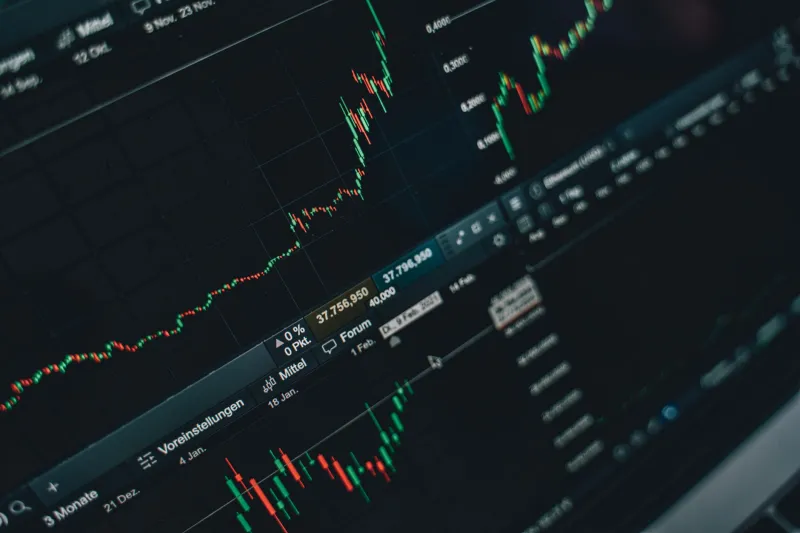
There is a particular kind of confidence that emerges when an AI trading agent posts a 34% annualized return across three years of historical data. Charts slope upward. Drawdowns look manageable. The Sharpe ratio inspires conviction. Then the agent goes live—and within its first week of real execution, the performance curve begins to flatten in ways the simulation never predicted.
This is not a fringe scenario. It is one of the most commonly documented failure modes in automated crypto trading, and it stems from a deceptively simple problem: the market environment that trained the agent is not the market environment the agent will trade in. The gap between those two realities is where capital goes to disappear.
The Anatomy of a Liquidity Assumption
Most backtesting frameworks operate on a core assumption that is almost never explicitly stated: that every order placed by the agent will be filled at or near the price visible in the historical record. This seems reasonable until you examine what that historical record actually represents.
Historical trade data captures completed transactions. It does not capture the depth of the order book at the moment those transactions occurred, the queue position of competing orders, or the market impact of the agent's own activity. When a backtest records a buy at $42,150, it assumes the agent stepped into that price cleanly. In live conditions, even a modestly sized order can push the ask upward before the fill is complete—a phenomenon known as slippage—leaving the agent with an entry price meaningfully worse than the one its simulation celebrated.
For agents trading high-frequency strategies or operating in thinner altcoin markets, this slippage is not a rounding error. It is a structural drag that compounds across hundreds or thousands of trades, quietly eroding the edge the backtest appeared to demonstrate.
Three Scenarios Where Agents Encounter Unexpected Friction
Scenario One: The Thin-Book Altcoin Trade
An agent trained on 18 months of historical data for a mid-cap token may have encountered periods of robust liquidity during bull market conditions. When it attempts to replicate a position size calibrated to that history during a quieter cycle, it may find that the top five levels of the order book cannot absorb its order without significant price impact. The agent fills—but at a cost its simulation never accounted for.
Scenario Two: The Flash Liquidity Event
Large market participants—whether institutional desks or coordinated retail activity—periodically pull limit orders from the book in anticipation of a sharp move. These events create momentary voids in liquidity that last seconds or less, but they are precisely the moments when a reactive agent is most likely to be executing. Historical data smooths over these gaps. Live execution does not.
Scenario Three: The Agent's Own Market Impact
A well-performing agent that attracts capital allocations grows its position sizes. A strategy that worked cleanly at $50,000 per trade may begin to move the market at $500,000. The backtest, constructed on fixed historical prices, never modeled what the agent's own footprint would do to the prices it was trying to capture. This self-defeating feedback loop is particularly acute in decentralized exchange environments, where on-chain liquidity pools respond directly to order size through automated pricing formulas.
Stress-Testing Against Real Market Microstructure
The antidote to these failure modes is not a better backtest. It is a fundamentally different testing methodology—one that treats liquidity as a variable rather than a constant.
Incorporate Order Book Depth Data
Level 2 data, which captures bid and ask quantities at each price tier rather than just the best available price, should be the baseline for any serious simulation. Frameworks that replay historical order book snapshots allow agents to be evaluated against realistic fill probabilities rather than idealized execution assumptions.
Model Slippage as a Function of Order Size
Rather than applying a flat slippage estimate, effective stress-testing models the relationship between order size and expected price impact using market impact models calibrated to the specific venue and asset. For DeFi deployments, this means simulating against actual liquidity pool mechanics, including the price curves that govern automated market makers.
Run Adversarial Liquidity Scenarios
Deliberately introduce stress conditions that historical data may underrepresent: periods of near-zero liquidity, bid-ask spreads that widen by a factor of five, and sudden withdrawal of depth across multiple price levels simultaneously. An agent that maintains acceptable performance under these conditions is demonstrably more robust than one tested only against favorable historical periods.
Establish Live Paper Trading Phases
Before committing capital at full scale, route the agent through a live paper trading environment that connects to real order books without executing. This surfaces latency issues, API throttling, and order routing behavior that no historical simulation can replicate. It also provides a baseline for comparing simulated fill prices against what actual execution would have yielded.
Rethinking What a Backtest Is Actually For
Backtests serve a legitimate purpose: they help operators understand whether a strategy has any historical basis for its logic. They are hypothesis generators, not performance guarantees. The mistake is treating them as the latter.
At 9Wickets Agent, the principle that guides deployment decisions is straightforward: an agent has not demonstrated readiness until it has been tested against the friction of the real market, not just the tidiness of the historical record. Smart contracts may execute with precision, but the market they operate in is under no obligation to cooperate.
Liquidity is not a backdrop. It is an active, shifting constraint that an agent must be designed to navigate—not assume. The operators who internalize that distinction before deployment are the ones whose performance curves still slope upward six months after go-live.