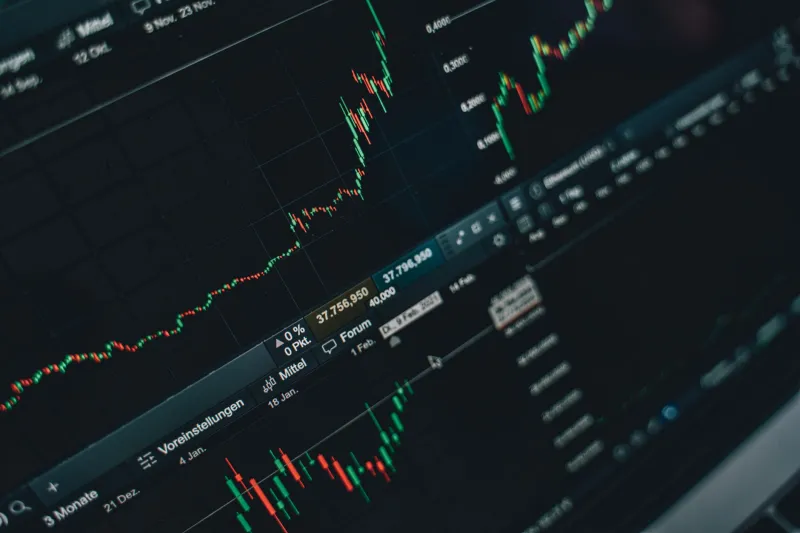
Deadlocked at the Bell: How Multi-Agent Voting Failures Are Costing Crypto Portfolios Real Money
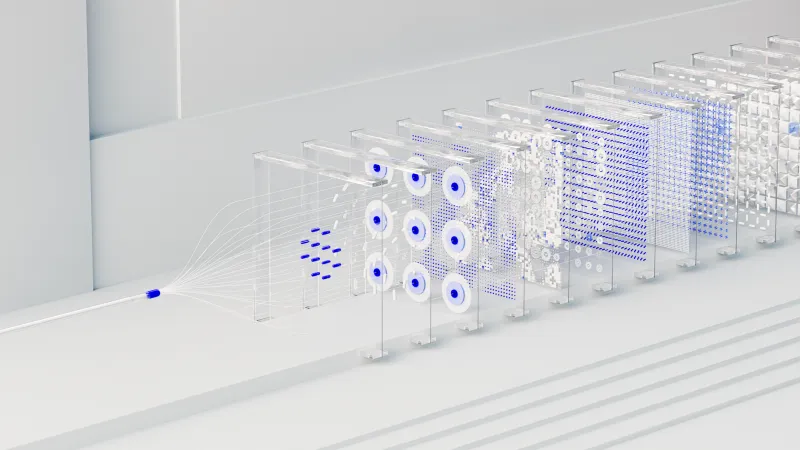
There is a seductive logic to the idea of a multi-agent portfolio. Distribute intelligence across nine specialized systems, let each one evaluate market conditions from its own vantage point, and allow the collective output to drive execution. On paper, it reads like a resilient, self-correcting architecture. In practice, when those nine agents receive divergent signals at the same moment, the system can freeze entirely—while the market moves without it.
This is the consensus problem. It is not a theoretical edge case. It is a structural vulnerability embedded in virtually every multi-agent deployment that lacks a deliberate, tested decision-resolution framework.
Why Distributed Intelligence Creates Distributed Disagreement
Each agent in a well-designed portfolio is built to specialize. One monitors on-chain volume anomalies. Another tracks funding rates across perpetual futures markets. A third interprets macro sentiment derived from social data feeds. The strength of this architecture is also its central liability: because each agent is optimized for a different signal type, they will frequently arrive at contradictory conclusions about the same asset at the same moment.
Consider a scenario playing out with increasing frequency in US-based institutional deployments. A momentum agent identifies a breakout pattern forming on a mid-cap altcoin. A risk-adjusted volatility agent simultaneously flags the same asset as overextended. A liquidity agent reports thin order books on the relevant trading pairs. Three agents, three incompatible directives. If the governance layer has not defined a clear resolution protocol, the system defaults to inaction—or worse, executes a partial position that satisfies none of the underlying logic.
Inaction sounds safe. In a trending market, it is not. The cost of missed execution compounds quickly.
Simple Majority Voting and Its Fundamental Flaw
The most common approach to resolving agent disagreement is straightforward majority voting: whichever directive receives five or more votes among nine agents proceeds to execution. This model has the advantage of simplicity, and in stable, clearly trending markets, it functions adequately.
The problem emerges at inflection points—precisely the moments when accurate, fast execution matters most. Inflection points are defined by ambiguity. When market conditions are genuinely uncertain, agent signals will cluster around a split, often producing a four-to-four-to-one distribution rather than a clean majority. Simple voting does not resolve this. It surfaces the disagreement without providing a mechanism to move past it.
In documented cases from automated trading operations active during the 2022 and 2023 crypto market cycles, simple majority deadlocks during high-volatility windows led to execution delays ranging from several seconds to over a minute. In fast-moving markets, a sixty-second delay on a leveraged position is not a minor inefficiency. It is a quantifiable loss event.
Weighted Consensus: Giving Some Agents a Louder Voice
A more sophisticated approach involves assigning differential weights to individual agents based on their demonstrated accuracy in specific market conditions. Rather than treating every vote as equal, the governance layer consults a rolling performance record and amplifies the input of agents whose recent signals have proven most reliable in the current regime.
This model introduces meaningful complexity. Weights must be recalibrated continuously, and the recalibration process itself requires a meta-layer of oversight. If an agent's weight is inflated based on a short run of accurate calls during an anomalous market period, it may be over-empowered precisely when conditions shift and its edge disappears.
Nevertheless, weighted consensus outperforms simple majority voting in most backtested environments when the weighting mechanism is tied to regime-specific performance rather than aggregate historical accuracy. The distinction matters: an agent optimized for ranging markets should carry less weight during a momentum-driven breakout, regardless of its long-term track record.
The Tie-Breaker Architecture: Designing for the Hard Cases
Beyond voting models, the most operationally mature multi-agent systems incorporate explicit tie-breaker protocols that activate when no consensus threshold is reached within a defined time window. These protocols typically take one of three forms.
The first is a designated arbitration agent—a system-level module that does not participate in standard voting but holds override authority when deadlock is detected. This agent is typically trained on historical deadlock scenarios and optimized specifically for resolution speed rather than signal accuracy. Its job is not to be right. Its job is to break the tie before the opportunity expires.
The second approach involves a conservative default: when no consensus is reached, the system executes the smallest permissible position size rather than full allocation or no allocation. This partial execution strategy captures some exposure without committing capital at full risk during a period of genuine signal uncertainty.
The third model, increasingly adopted among algorithmic trading firms operating in US markets, is a time-weighted escalation. If consensus is not achieved within a defined interval—say, 400 milliseconds—decision authority escalates automatically to a human oversight layer. This hybrid model preserves the speed advantages of automation in clear-signal environments while ensuring that genuinely ambiguous situations receive qualified human judgment.
The Cost of Getting This Wrong
The financial consequences of inadequate consensus architecture are not abstract. During a notable March 2023 volatility event affecting several major Layer 1 assets, multiple institutional-grade automated portfolios reported execution failures attributable to agent disagreement rather than connectivity or liquidity issues. In several documented instances, the deadlock persisted long enough for the underlying price movement to reverse, converting what would have been a profitable entry into a missed trade with a negative opportunity cost running into six figures.
What made these failures particularly instructive was that the individual agents were performing correctly. Each one was accurately interpreting its designated signal type. The failure was architectural—a governance layer that had never been stress-tested against a genuine multi-signal conflict under time pressure.
Building Toward Faster Resolution
For US-based investors operating multi-agent systems, the practical takeaway is that consensus architecture deserves the same engineering rigor as signal generation and execution logic. A portfolio that can identify an opportunity in 200 milliseconds but requires two seconds to resolve an internal voting conflict is not a well-optimized system. It is a fast engine attached to a slow transmission.
The most effective deployments treat consensus failure as a first-class risk category—one that is modeled, tested against historical data, and assigned explicit fallback behavior before the system goes live. Deadlock scenarios should be simulated during the audit phase, not discovered during a live trading session.
At 9Wickets Agent, the principle underlying smart contract deployment applies equally to agent governance: the logic that governs how your system decides is as important as the logic that governs what it decides. When nine agents go to the mat over a conflicting signal, the architecture that resolves that disagreement in under half a second is not a technical nicety. It is the difference between a portfolio that captures the market and one that watches it pass by.