When Markets Gap and Agents Freeze: The Hidden Architecture Failures Behind Blown Crypto Positions
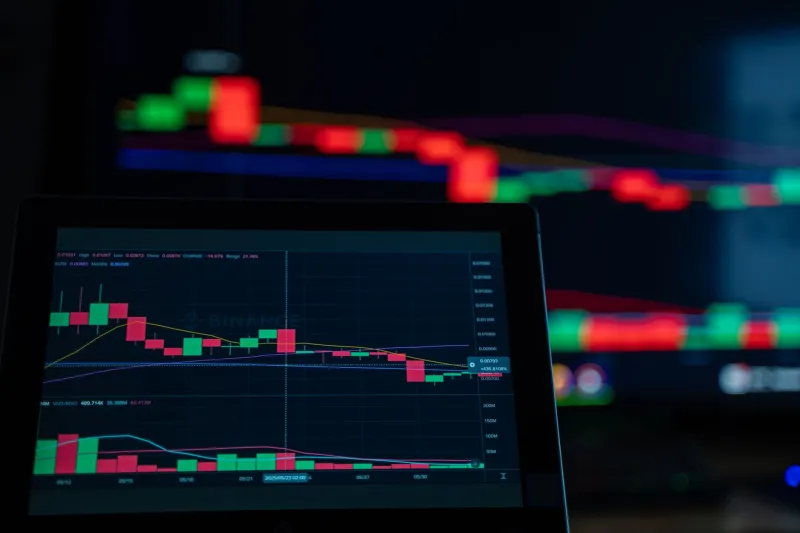
In cricket, a wicket that falls unexpectedly changes everything. The field resets, pressure redistributes, and teams that lack contingency planning scramble. Crypto markets operate on a similar logic. When conditions shift without warning — when a price gaps 20% in seconds and order books hollow out — automated trading agents face their most consequential test. Many fail it catastrophically.
This is not a peripheral concern. It is the central vulnerability of algorithmic crypto trading, and it deserves the kind of rigorous architectural attention that most platform discussions quietly sidestep.
The Assumption Problem: Agents Built for Calm
Most automated trading agents are calibrated against historical data that, by definition, excludes the most extreme market events. Backtests run cleanly. Simulations resolve positions at quoted prices. Risk parameters are tuned against volatility ranges that feel conservative — until they aren't.
The foundational error is assuming continuous markets. In equities, circuit breakers and exchange-level halts create structured pauses. In crypto, the 24/7 nature of trading means there is no institutional pause mechanism. Liquidity can vanish not gradually but instantaneously, leaving an agent holding a position it is mathematically incapable of exiting at any acceptable price.
When a major exchange experiences a flash crash — as has occurred multiple times across Bitcoin, Ethereum, and various altcoins — agents operating on leverage face a compounding problem. Their exit signals trigger, but the market depth required to absorb their sell orders simply does not exist. Slippage balloons from basis points to percentage points. Liquidation engines activate. And what began as a controlled drawdown becomes a cascading sequence of forced unwinds that the original position-sizing logic never contemplated.
Liquidity Voids and the Slippage Spiral
Slippage is the quiet assassin of automated trading strategies. Under normal conditions, it is manageable — a small friction cost baked into execution models. During gap events, however, slippage transforms into something qualitatively different: a confirmation that the market you modeled no longer exists.
Consider the mechanics. An agent holds a leveraged long position in a mid-cap token. Adverse news — a regulatory announcement, a protocol exploit, a large holder liquidation — hits simultaneously across multiple venues. The order book thins in milliseconds. The agent's stop-loss fires, but the nearest available liquidity is 8% below the trigger price. The agent executes there, realizing a loss far beyond its risk model's projections. If the position was sized for a 3% adverse move, an 8% slippage event does not merely exceed expectations — it potentially wipes the entire allocation.
This scenario is not hypothetical. It has played out repeatedly in US crypto markets, particularly in tokens with lower daily volume where institutional market-makers withdraw during stress events, leaving retail-facing liquidity as the only remaining bid.
Cascading Liquidations: When Agents Become Each Other's Enemy
Perhaps the most underappreciated failure mode is the interaction effect between multiple agents operating on similar logic. When a price decline triggers liquidation thresholds across a cohort of leveraged positions simultaneously, the resulting sell pressure accelerates the very decline that triggered the liquidations. Each forced exit makes the next one more severe.
This is not a theoretical concern. DeFi lending protocols have documented multiple instances where liquidation cascades drove collateral values down faster than liquidation bots could process them, resulting in protocol-level bad debt. Agents operating on centralized exchanges face an analogous dynamic when exchange liquidation engines process large queues during illiquid periods.
The architectural implication is significant: an agent's risk model cannot treat its own liquidation as an isolated event. It must account for the possibility that its exit is one of hundreds occurring simultaneously, each one degrading the conditions for the next.
Designing Resilience: What Separates Survivors from Casualties
Agents that navigate gap events without catastrophic loss share several design characteristics that distinguish them from their less resilient counterparts.
Dynamic position sizing tied to real-time liquidity metrics. Rather than fixing position sizes based on account percentage alone, resilient agents incorporate order book depth into their sizing calculations. When liquidity is thin, positions are smaller. This is not a conservative adjustment — it is a structural recognition that position size and exit feasibility are inseparable.
Tiered exit strategies with liquidity-aware triggers. A single stop-loss price is a brittle mechanism. Sophisticated agents implement layered exit logic: a primary trigger, a secondary trigger with reduced size, and a tertiary fallback that may accept partial execution over time rather than demanding immediate full liquidation. This approach sacrifices precision for survivability.
Volatility-adjusted risk parameters that update continuously. Static risk thresholds calibrated to average volatility are inadequate during tail events. Agents that monitor realized volatility on short timeframes — minutes, not days — and dynamically tighten exposure before extreme moves fully develop have a structural advantage. They reduce before the gap, not during it.
Circuit breaker logic embedded at the agent level. Waiting for exchange-level halts is a passive strategy. Agents can implement their own pause mechanisms: if price movement exceeds a defined threshold within a defined window, the agent suspends new position-opening activity, reduces existing exposure incrementally, and waits for conditions to stabilize before resuming normal operation. This mirrors institutional risk desk behavior and translates well to automated systems.
Fallback routing across multiple venues. Agents dependent on a single execution venue are exposed to that venue's liquidity constraints. Agents with cross-venue routing capability can seek liquidity where it exists, rather than hammering a depleted order book on a single exchange.
The Governance Question: Who Decides When the Agent Is Wrong?
Beyond architecture, gap events raise a governance question that purely technical discussions tend to avoid. At what point does a human operator need to override an automated agent's behavior?
The answer is not zero — human oversight during extreme market stress is a legitimate risk management layer, not an admission of algorithmic failure. The most sophisticated deployments incorporate escalation protocols: when an agent's loss exceeds a defined threshold, or when market conditions deviate beyond a defined statistical range, the system alerts a human operator and suspends autonomous action pending review.
This is not a retreat from automation. It is an acknowledgment that automation is a tool, and tools require operators who understand their limits.
Building for the Market That Doesn't Exist Yet
The gap events of the future will not look exactly like those of the past. New token structures, evolving DeFi liquidity mechanics, and shifting regulatory conditions will create stress scenarios that current historical data cannot capture. Agents built to survive only the gaps that have already happened are, by definition, behind.
Resilient position management requires agents designed around principles rather than parameters — systems that can reason about liquidity, adapt to volatility regimes, and degrade gracefully when their assumptions are violated. The goal is not an agent that never loses. It is an agent that, when markets gap and conditions collapse, does not become part of the problem.
At 9Wickets Agent, this distinction shapes how we think about every deployment. Smart contracts and smarter moves are not just aspirational language. In position management under stress, they are the difference between a recoverable drawdown and a blown account.