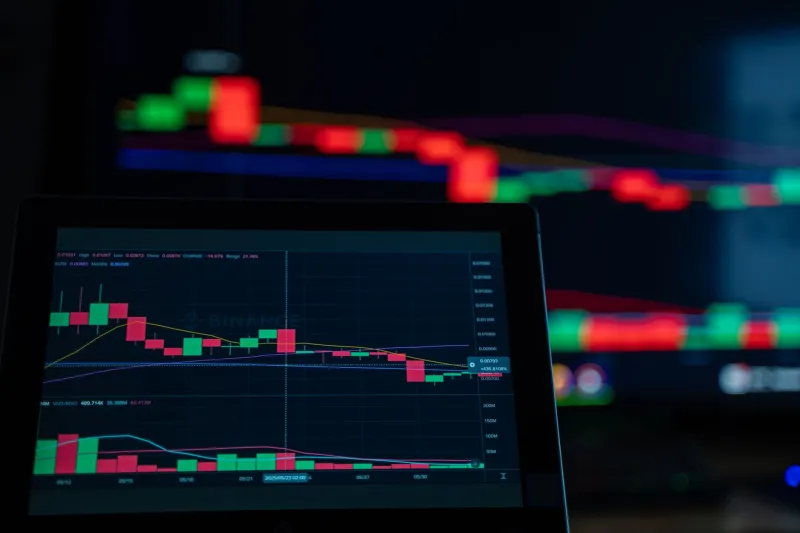
Mainnet Reality Check: Why Simulated Profits Collapse When Your Agent Goes Live

There is a moment familiar to almost every serious crypto agent operator: the backtest looks exceptional. Sharpe ratios are solid, drawdowns are contained, and the equity curve climbs with reassuring consistency. Then the agent goes live on mainnet, and within days — sometimes hours — the performance profile bears almost no resemblance to what the simulation promised.
This is not a fringe problem. It is one of the most persistent and underappreciated challenges in automated crypto trading, and it affects operators at every level of sophistication. The gap between simulated environments and actual blockchain execution is not merely technical noise. It reflects deep structural differences in how liquidity behaves, how transactions are processed, and how market microstructure operates when real capital is at stake.
Understanding why this gap exists — and how to close it before deployment — is one of the most consequential decisions an agent operator can make.
The Illusion of Historical Liquidity
Most backtesting frameworks reconstruct market conditions using historical order book snapshots, trade logs, or aggregated price feeds. The problem is that these records capture what liquidity looked like at a given moment, not what it would have looked like had your agent actually been participating in the market.
This distinction matters enormously. Historical data reflects a world in which your agent was absent. The moment it enters the market with meaningful order flow, it alters the very conditions it was trained to exploit. Large limit orders that appeared available in the historical record may have been partially filled by other participants, pulled by market makers responding to flow, or resting at price levels that only existed momentarily.
The result is what practitioners often call phantom liquidity: depth that appears real in simulation but evaporates on contact during live execution. An agent calibrated to enter a position at a specific price, assuming a certain volume is available at that level, may find itself filled at a significantly worse price — or not filled at all — when it attempts the same trade on mainnet.
Slippage Patterns That Backtests Cannot Replicate
Slippage in simulation is typically modeled as a fixed cost or a simple function of trade size. Real-world slippage is considerably more complex. It varies by time of day, network congestion, the presence of competing agents, and the current state of the mempool.
On Ethereum and similar networks, the path from transaction submission to on-chain settlement is neither instantaneous nor predictable. Gas price fluctuations, block confirmation delays, and the behavior of MEV searchers all introduce execution uncertainty that historical data cannot fully encode. An agent that appears to execute at the midpoint in simulation may routinely experience adverse fills of 20 to 50 basis points in live conditions — enough to eliminate the edge entirely on strategies with thin margins.
DEX-based agents face additional complexity. Automated market maker pricing curves respond dynamically to trade size, and the effective price for any given order depends on pool depth at the precise moment of execution, not the moment the order was constructed. In volatile market conditions, the difference between those two moments can be substantial.
Structural Differences in Market Microstructure
Beyond liquidity and slippage, there are subtler microstructural differences that compound the problem. Historical data tends to be cleaner than live data. Gaps, anomalies, and erratic price behavior that occur during high-volatility periods are sometimes smoothed over in aggregated feeds or simply absent from the datasets used to train agents.
When an agent encounters these conditions for the first time on mainnet — a flash crash, a sudden spread widening on a low-cap pair, or a coordinated wash trading episode — its response may be poorly calibrated. Strategies that performed well in the relatively orderly conditions captured in historical data can behave unpredictably when the microstructure shifts.
This is particularly relevant for agents operating across multiple venues simultaneously. Cross-exchange arbitrage strategies, for instance, depend on latency assumptions that are extremely difficult to model accurately in simulation. The timing relationships between price updates on different platforms are not static, and agents that rely on those relationships holding constant will find mainnet execution repeatedly frustrating.
Detection Mechanisms: Identifying the Gap Early
Sophisticated operators do not wait for catastrophic underperformance to identify these discrepancies. They build detection mechanisms into the deployment process itself.
One common approach is paper trading with live data feeds — running the agent in a shadow mode where it generates signals and would-be order submissions without actually executing them, then comparing simulated fills against what would have occurred in the real market. This is more informative than pure backtesting because it uses current market microstructure rather than historical reconstructions.
Slippage tracking is another essential diagnostic. Operators who log the difference between expected and actual execution prices across every live trade accumulate a dataset that reveals systematic biases in their models. If slippage is consistently worse during certain hours, on certain pairs, or above certain order sizes, that pattern points directly to where the simulation diverged from reality.
Some teams also implement canary deployments — launching the agent with a deliberately small capital allocation and treating the initial period as a live calibration exercise rather than a production run. The cost of underperformance at small scale is the price of accurate data that no simulation can provide.
Position Sizing as a Risk Mitigation Tool
One of the most practical responses to phantom liquidity risk is conservative position sizing relative to available market depth. Agents that attempt to deploy capital in proportion to their backtested returns, without accounting for the liquidity constraints of the live market, will consistently move prices against themselves.
A disciplined approach involves estimating available liquidity at each price level and capping order size at a fraction of that depth — commonly between five and fifteen percent, depending on the strategy and the asset class. This reduces the agent's market impact and improves the probability that fills will occur at prices close to those assumed in the model.
Dynamic position sizing, which adjusts allocation in real time based on observed spread width and order book depth, offers a more sophisticated alternative. Rather than applying a fixed cap, the agent continuously evaluates current conditions and scales its exposure accordingly. This requires additional engineering but substantially improves execution quality in varying market environments.
Architectural Safeguards Before Capital Gets Deployed
At the infrastructure level, operators who take this problem seriously build safeguards directly into their agent architecture. Pre-execution liquidity checks — queries that verify current depth before submitting an order — can prevent the agent from entering positions that the market cannot absorb at the expected price.
Circuit breakers tied to realized slippage thresholds offer another layer of protection. If the agent's actual fills begin deviating from modeled expectations by more than a defined margin, the system pauses and alerts the operator rather than continuing to trade under degraded conditions.
Finally, simulation environments that incorporate realistic transaction cost models, including gas fees, network latency distributions, and MEV exposure estimates, produce more reliable pre-deployment signals than those that treat execution as frictionless. The investment in building more accurate simulation infrastructure pays dividends every time it prevents a poorly calibrated agent from reaching mainnet.
Closing the Gap
The distance between a promising backtest and a profitable live deployment is not closed by optimism or by running more historical simulations. It is closed by confronting the structural realities of blockchain execution — the phantom liquidity, the unpredictable slippage, the microstructure dynamics that no dataset fully captures — and engineering responses to each of them before capital is at risk.
At 9Wickets Agent, the principle is straightforward: smarter moves begin with an honest accounting of what simulation can and cannot tell you. The operators who build that discipline into their process are the ones whose agents survive contact with mainnet.